

Where To Stay In Mexico City: Best Areas And Hotels
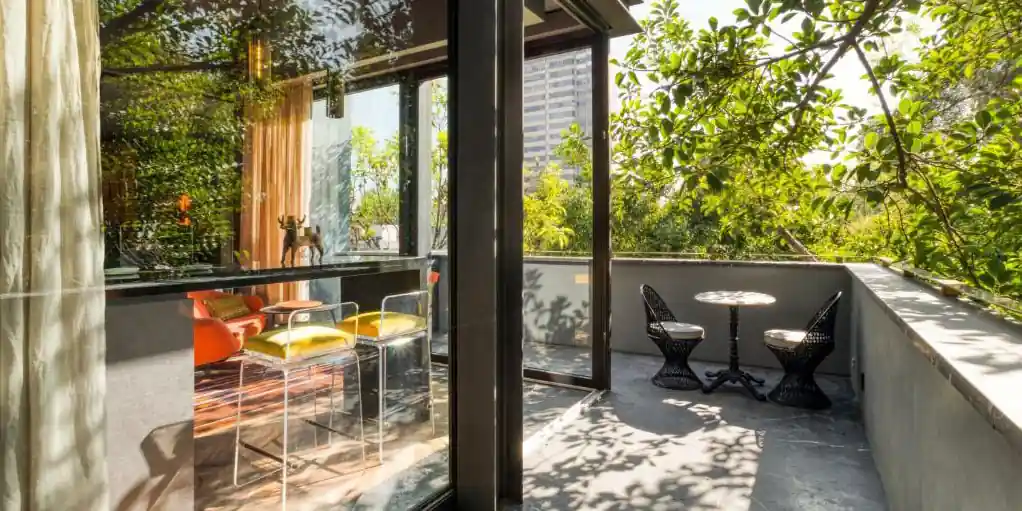 Hotel El Alfonso in the Roma Norte neighborhood
Where you stay in Mexico City changes the pace of the trip. A hotel in Roma Norte or Condesa puts restaurants, cafés, and leafy streets close to your door. A stay in Polanco gives you larger hotels, quieter evenings, and easy access to major museums. Centro Histórico places the main historic sights within walking distance, while Coyoacán suits a more focused stay south of the center.
The right choice depends less on a neighborhood’s fame than on how your days are likely to run. First-time visitors usually do best in areas with good hotels, restaurants nearby, and enough street life to make evenings simple. Our guide starts with the areas that work best as bases, then helps you decide which one fits your plans.
Roma Norte: A Walkable Base
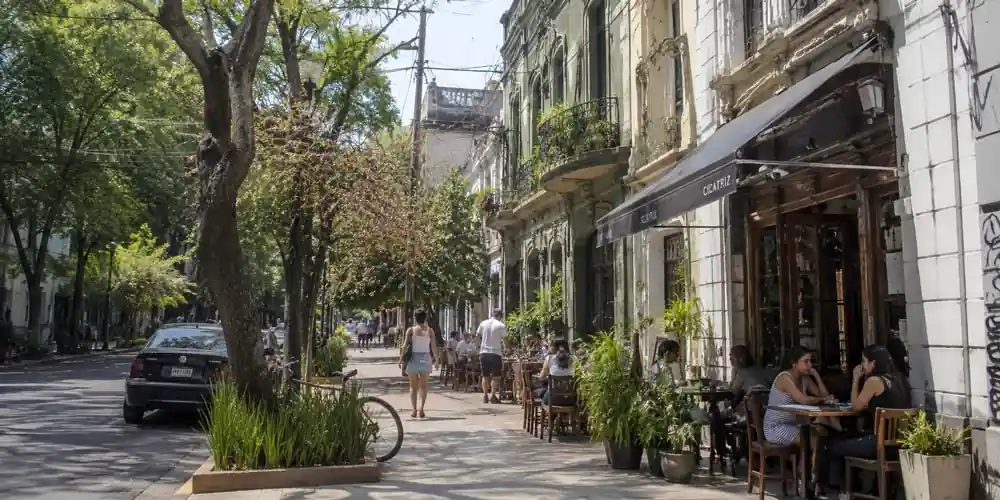 Historic architecture and cafés in Roma Norte
In Roma Norte, restaurants, cafés, and shops are close together, so most outings start and end on foot. Meals don’t require crossing the city, and evenings are easy to manage without planning transport. The streets stay active through the day, which keeps the area practical as well as lively.
Streets fill early and stay active into the evening, with restaurants, cafes, and small shops lining the same blocks. Mornings begin with coffee nearby, afternoons break easily for a meal, and evenings settle into short walks between restaurants and bars, all within the same few streets.
Condesa: A Quiet, Leafy Base
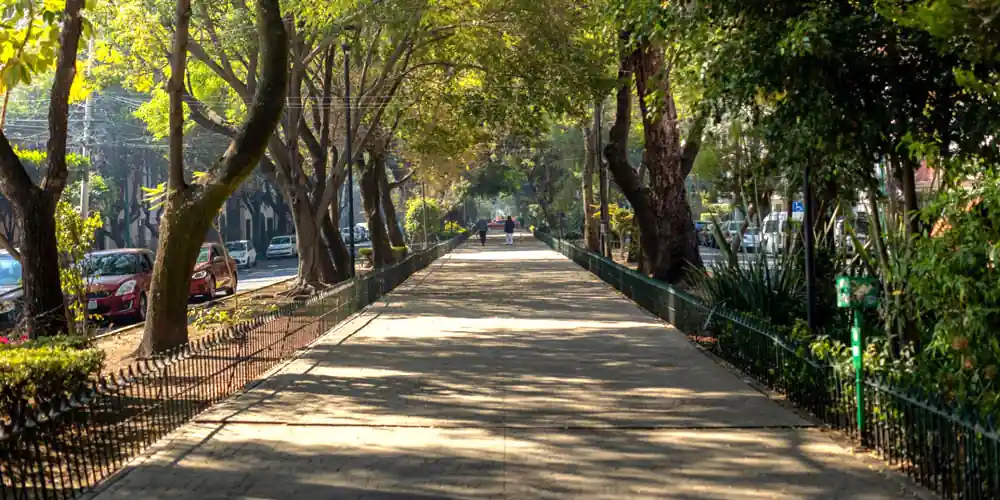 A tree-lined boulevard in Condesa
Condesa runs at a slower pace than Roma Norte, defined by its parks and wider streets. Daily life centers around Parque México and Parque España, with cafes and restaurants with less noise and less constant activity late into the evening. The area feels more open, with a steady pace that carries through the day and into the evening.
Streets curve around the parks, setting the tone of Condesa. Apartment-style stays are common, along with smaller boutique hotels set back from the main avenues. Daily outings tend to revolve around the green spaces, with cafés and restaurants reached in short walks between them.
Polanco: Upscale Hotels & Museums
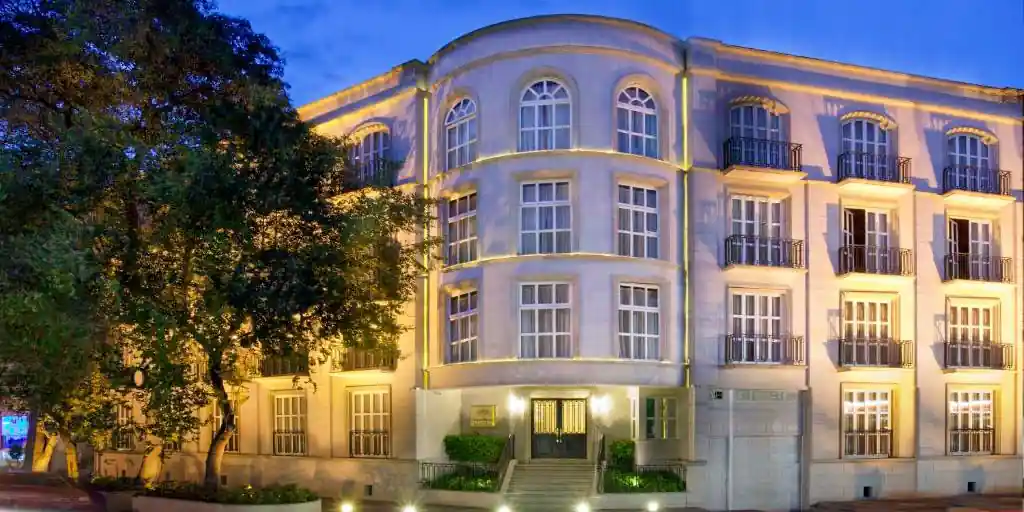 Grand Polanco Residencia hotel in Polanco
Polanco concentrates many of the city’s major museums and higher-end restaurants within a compact area. The National Museum of Anthropology, Museo Soumaya, and the restaurants along Avenida Presidente Masaryk draw a steady flow through the day. It’s an area built around established institutions rather than small, independent streets.
Wide sidewalks, polished storefronts, and formal restaurant rooms define the atmosphere. Lunch runs long, dinners start later, and the streets hold a steady rhythm rather than peaks and drops. Movement stays focused along the main avenues, with most activity returning to the same stretches over the course of the day.
Centro Histórico: The Historic Core
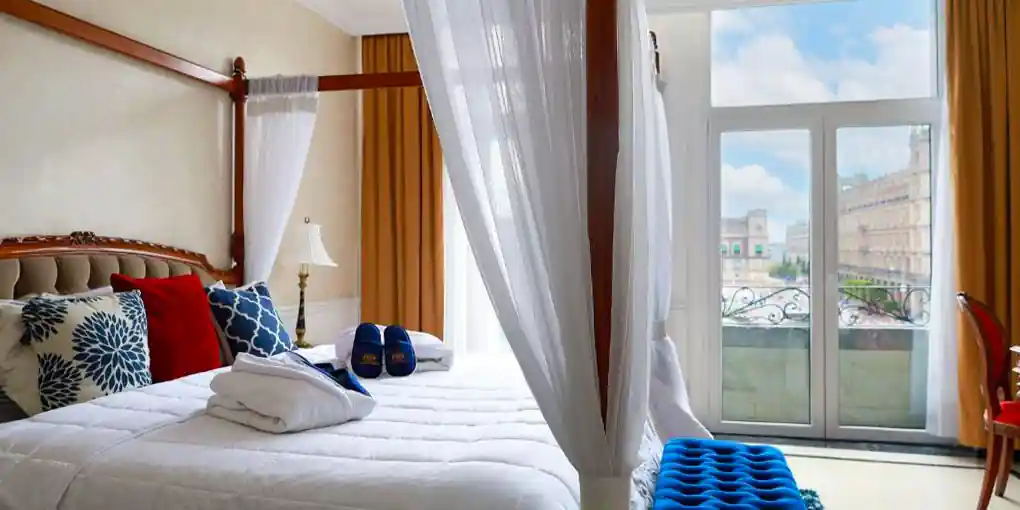 A junior suite Gran Hotel Ciudad de México
The Zócalo, the city’s main square, anchors Centro Histórico, with the cathedral, government buildings, and major museums arranged along the surrounding streets. Distances between sights are short, and the street pattern keeps most routes direct. Shops and cafés fill the ground floors, so there are places to stop throughout the day.
This is the oldest part of the city, built over the Aztec capital of Tenochtitlan. Remains of the Templo Mayor are found a short walk from the cathedral, with layers of Spanish colonial buildings added over time. Staying here places those periods side by side, within a few streets of each other.
See Hotels In Centro Histórico →
Coyoacán: A Village-Style Setting
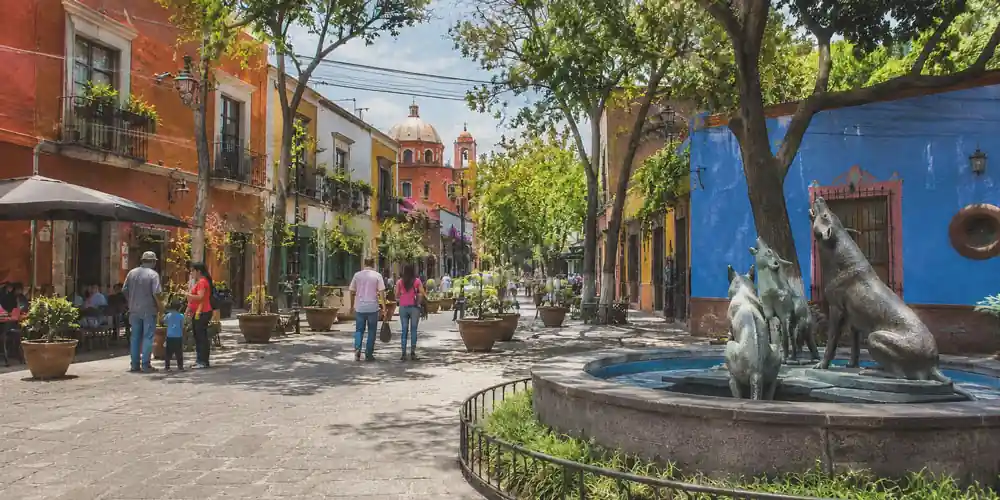 Coyoacán includes plazas, markets, and slower residential streets
The Frida Kahlo Museum is the cultural center of Coyoacán, located only a few streets from Jardín Hidalgo and Plaza Centenario. The squares fill through the day, with families on benches, vendors setting up, and regular foot traffic between the market, cafés, and nearby streets. Gardens, churches, and small shops are close together, and the area sees a steady flow of pedestrians through the day.
Coyoacán predates Mexico City itself, and was the base for Hernán Cortés, the Spanish conquistador. That earlier layout can still be seen in the plazas, church courtyards, and market streets. Days play out around the squares, with short walks linking cafes, food stalls, and nearby streets.
Find Your Mexico City Hotel
The best Mexico City hotels book up fast, and a good location saves time every day. This search pulls together top-rated 5-star stays with strong reviews in the key neighborhoods. It's easy to compare and to book with confidence.
Find The Right Mexico City Hotel
In Mexico City the neighborhood often matters more than the hotel.
Compare highly-rated hotels in Roma Norte, Condesa, Polanco, Coyoacán, and Centro Histórico.