



Best Time To Visit Mexico City: When To Plan Your Trip
 Hemiciclo a Juárez surrounded by blooming jacaranda trees — Unsplash, Alejandro Barba
Mexico City enjoys a moderate climate throughout the year. At more than 2,200 metres (7,300 feet) above sea level, daytime temperatures stay relatively consistent from season to season. Instead of dramatic swings in temperature, the seasons are marked by flowering jacarandas, afternoon showers, and months of clear blue skies.
Spring is known for purple jacaranda blossoms, while October through February brings clearer skies and cooler mornings. The main seasonal change is the arrival of afternoon or evening showers from June through September. They rarely last all day, and mornings are often dry.
Mexico City Weather At A Glance
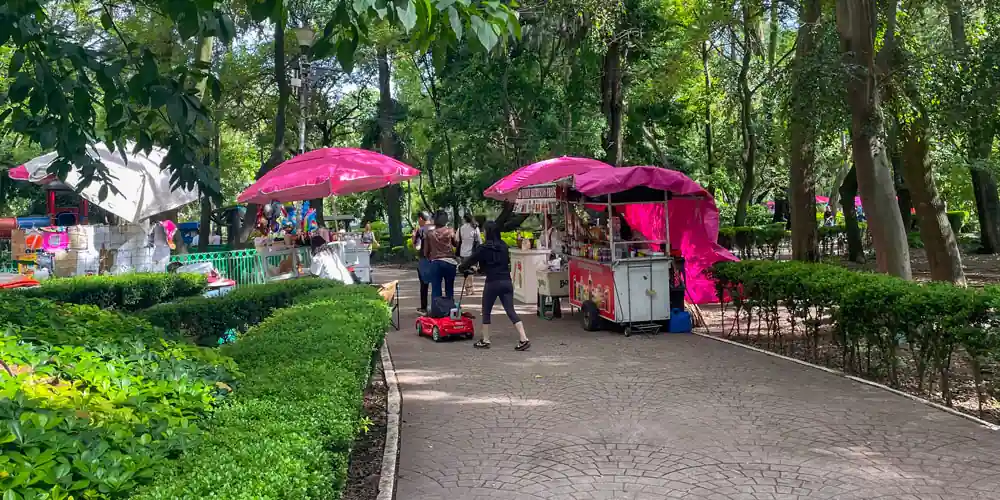 Vendors and families in Parque México, Condesa - Diane Shaskin
Daytime temperatures are generally in the 70s°F for much of the year, with the warmest afternoons in March, April, and May. Nights are cooler, especially from November through February, when early mornings can fall into the 40s°F. Snow is virtually unknown, and freezing daytime temperatures are exceptionally rare.
Humidity stays relatively low, even during the wetter months. Rain is concentrated from June through September and usually arrives later in the day. October through May is drier, with long stretches of clear weather and abundant sunshine.
Spring & Jacaranda Season (March–May)
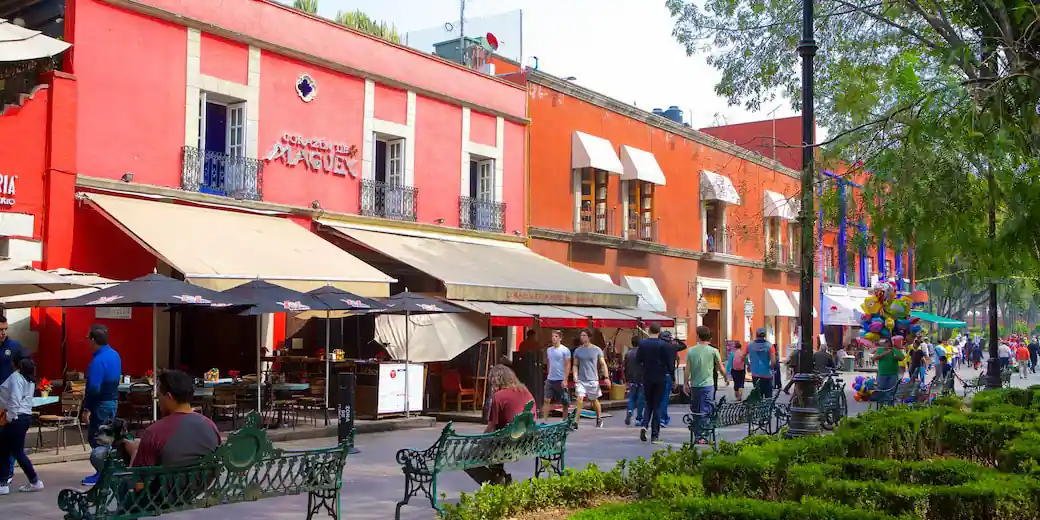 Outdoor cafés and tree-lined streets in Coyoacán
May marks the transition toward the wetter part of the year. Afternoon showers become more frequent, although long periods of sunshine are still common. Easter falls during March or April, bringing holiday crowds to museums, parks, and other popular attractions, while the city's outdoor cafés and gardens remain busy throughout the season.
Summer Showers (June–September)
Afternoon or evening showers become part of the daily pattern from June through September. Mornings are often sunny, with rain developing later in the day and lasting an hour or two before clearing. July receives the most rainfall, although showers can occur throughout the four-month period.
The city's parks, museums, cafés, markets, and neighborhood streets continue much as they do during the rest of the year. Carrying a light umbrella or compact rain jacket is usually enough, and a brief shower often provides a welcome break from the afternoon warmth.

Plan Your Days In Mexico City
Whether your interests are art, history, food, or archaeology, guided tours make it easier to focus each day around one part of the city. Compare walking tours, museum visits, food tours, and day trips out of the city for your travel dates.
Clear Skies (October-February)
October brings the return of clear skies. Days are bright, humidity drops, and visibility often stretches across the Valley of Mexico. Afternoon temperatures remain mild through autumn, while mornings and evenings gradually become cooler.
December, January, and February are the coolest months of the year, although daytime temperatures still commonly reach the upper 60s to low 70s°F. A light jacket is useful for early starts, rooftop dinners, and evenings outdoors, while lighter clothing is comfortable through the middle of the day.
When Should You Visit Mexico City?
Mexico City's moderate climate means the city is enjoyable in every season. The city's parks, neighborhoods, cafés, and outdoor markets remain part of daily life in every month of the year.
Spring is known for blue skies and blooming jacarandas. June through September brings greener parks and afternoon showers. October through February has the clearest skies of the year, cool mornings, and bright days for walking and outdoor sightseeing.
What To Pack
Layers are useful throughout the year. Mornings and evenings are often cooler than the middle of the day, especially from November through February. A light jacket or sweater is useful in every season, even when afternoons are warm.
From June through September, carry a compact umbrella or lightweight rain jacket for afternoon showers. Comfortable walking shoes are appropriate year-round, along with sunscreen, sunglasses, and a hat for the city's high-altitude sunshine.

Find Your Mexico City Hotel
The best Mexico City hotels book up fast, and a good location saves time every day. This search pulls together top-rated 5-star stays with strong reviews in the key neighborhoods. It's easy to compare and to book with confidence.
Frequently Asked Questions
WHEN IS THE BEST TIME TO VISIT MEXICO CITY?
Mexico City has a moderate climate throughout the year. Spring brings blooming jacarandas, June through September has afternoon showers, and October through February is known for clear skies and cooler mornings.
DOES IT RAIN ALL DAY DURING THE SUMMER MONTHS?
From June through September, rain most often falls during the afternoon or evening and commonly lasts an hour or two. Mornings are frequently sunny and dry.
WHEN DO THE JACARANDA TREES BLOOM IN MEXICO CITY?
Jacarandas normally bloom from late February through April, depending on weather conditions. Purple flowers line Paseo de la Reforma, Chapultepec Park, Parque México, and many residential streets.
WHAT SHOULD I PACK FOR MEXICO CITY?
Pack layers for cooler mornings and evenings throughout the year. From June through September, a compact umbrella or lightweight rain jacket is useful for afternoon showers.
Find The Right Mexico City Hotel
In Mexico City the neighborhood often matters more than the hotel.
Compare highly-rated hotels in Roma Norte, Condesa, Polanco, Coyoacán, and Centro Histórico.