Planning Your Mexico City Trip: Where To Stay, When To Go & What To Know
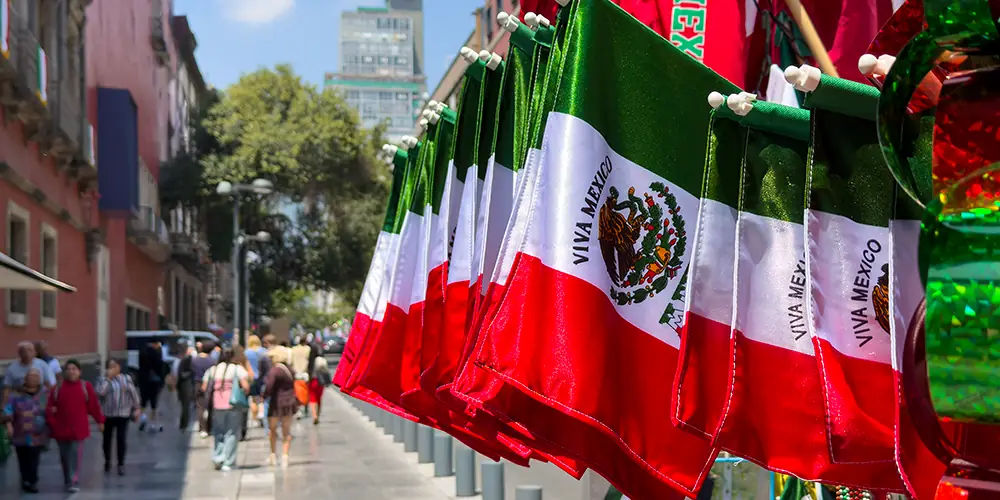 Mexican flags for sale in Centro Historico - Mark Craft
Mexico City is enormous, but a trip there doesn't have to feel complicated. The city makes more sense as a collection of distinct neighborhoods than as a checklist of sights. The Zócalo, cathedral, and Aztec ruins cluster in the historic center; Chapultepec Park and its great museums lie several miles west. Roma Norte and Condesa deserve time beyond a dinner reservation, and Coyoacán is worth the trip south for more than Frida Kahlo.
The pleasure of Mexico City is that the days don't have to be built entirely around major sights. A morning at the National Museum of Anthropology can continue with a walk through Chapultepec Park; a visit to Casa Azul still leaves Coyoacán's plazas, market, and colorful streets to wander. Markets, neighborhood cafes, street food, parks, and simply walking a few blocks become as memorable as the places that brought you across the city in the first place. Plan the important things, but leave enough room for Mexico City to fill in the rest.
Where To Stay In Mexico City
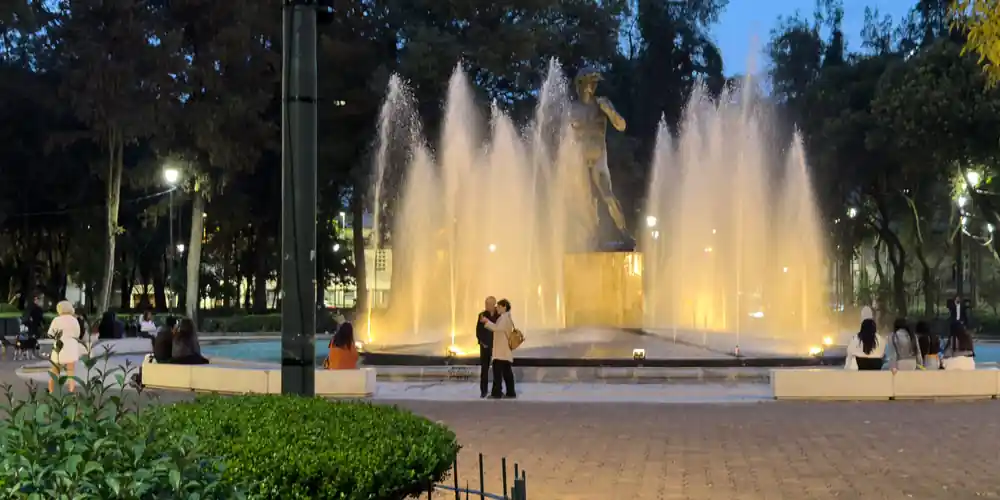 Statue of David in Plaza Rio de Janeiro, Roma Norte - Mark Craft
For a first visit, we'd start with Roma Norte or Condesa. Both put you among tree-lined streets, cafes, parks, food stands, and the everyday activity that makes these neighborhoods such appealing places to return to after a day elsewhere in the city. Roma Norte has more design hotels, boutiques, coffee bars, and restaurants set in early-20th-century buildings, while Condesa feels greener, with Parque México and Avenida Amsterdam at the center of neighborhood life.
Polanco is where to look for five-star hotels, familiar international brands, and luxury shopping, but we'd choose Roma or Condesa for their street life and atmosphere. Centro Histórico puts the Zócalo, cathedral, Templo Mayor, and other historic sights close at hand, though its intensely urban streets make it a better place to visit than stay. Coyoacán is the outlier: farther south and less convenient for the major sights, but perhaps the most appealing choice if colorful streets, markets, leafy plazas, and the feeling of an older Mexican town.
When To Visit Mexico City
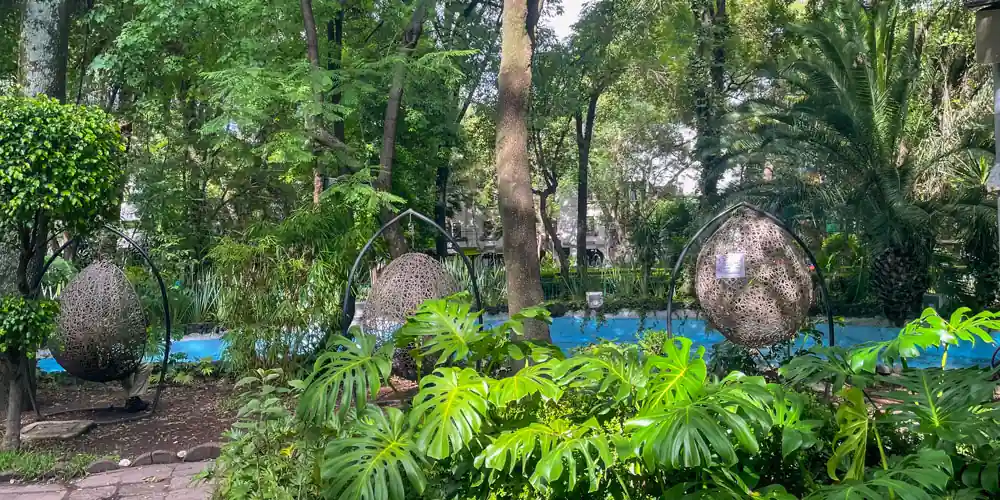 A reflective corner of Parque México - Diane Shaskin
Mexico City's weather is one of its pleasant surprises. At more than 2,200 meters above sea level, the city escapes the sweltering summer heat you might expect this far south. Daytime temperatures stay remarkably moderate for much of the year, winter is generally sunny and dry, and even the June-to-September rainy season is less daunting than it sounds.
Summer rain tends to arrive in the afternoon or evening, often for only an hour or two before the skies clear and the temperature settles back into the comfortable 20s Celsius. Spring has warmer afternoons and the purple bloom of jacarandas; October and November bring clearer skies after the summer rains; winter means crisp mornings followed by sunny days. There isn't really a bad season for Mexico City — the better question is which version of the city you'd like to see.
Mexico City Airport
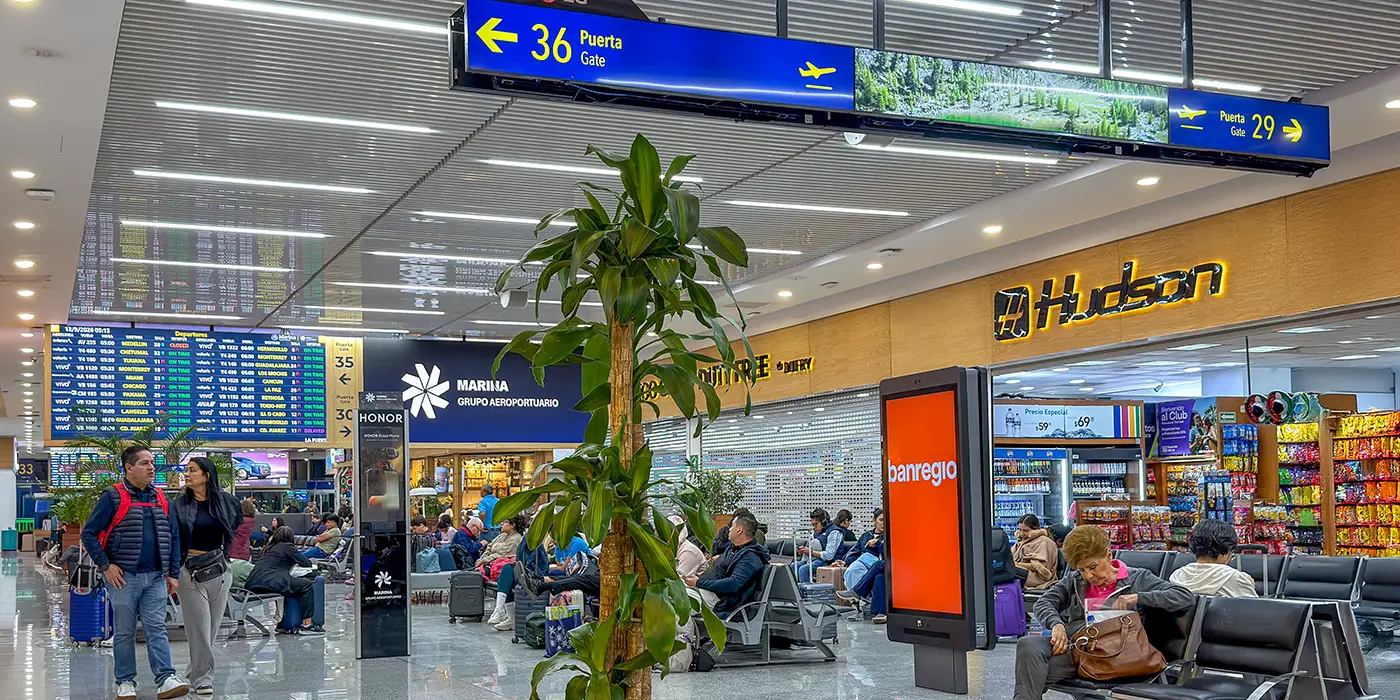 Departure terminal at Mexico City Airport - Mark Craft
Mexico City International Airport was a pleasant surprise. Recent improvements have made MEX remarkably easy to navigate for an airport serving a city this large. Check-in and security move efficiently, the terminals don't feel overwhelmingly crowded, and plenty of staff are on hand for directions or assistance. Arrival is far less hectic than you might expect.
A private transfer arranged before leaving home makes that arrival even easier. After a long flight, there is something reassuring about walking out of the terminal to a driver waiting with your name, then heading directly to the hotel without making another decision. It's not essential — taxis and other transportation are readily available — but for a first arrival in Mexico City, it's a small luxury worth booking.
How Many Days Should You Spend In Mexico City?
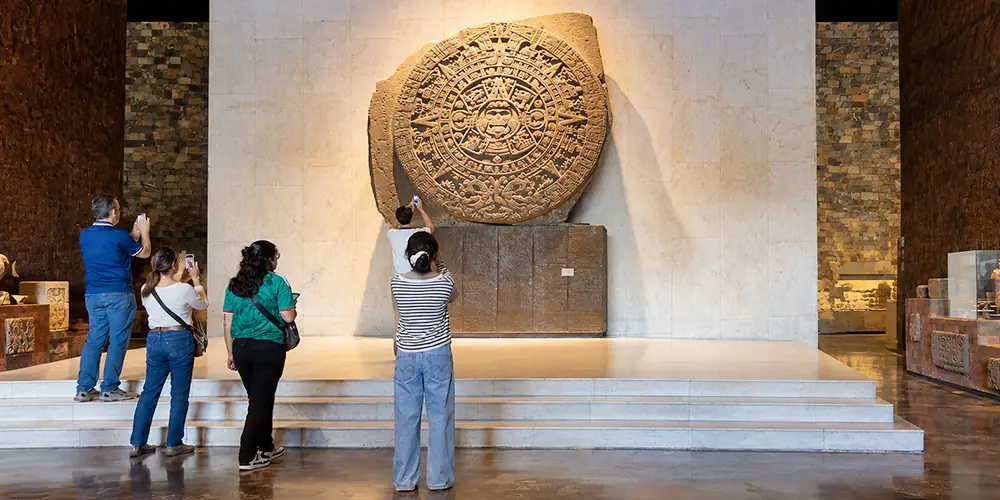 The Aztec calendar disc at the Anthropology Museum - Mark Craft
Four or five days gives Mexico City room to breathe. That's enough time for the historic center, Chapultepec and the National Museum of Anthropology, an afternoon in Coyoacán, and perhaps a food tour or Teotihuacán without turning every day into a race across the city. Just as important, there's time for a long lunch, an unexpected market, or another hour walking a neighborhood you particularly like.
With only three days, something has to give. Teotihuacán takes the better part of a day, the Anthropology Museum can easily fill a morning, and Coyoacán deserves more than a quick visit to Casa Azul. A week changes the character of the trip: museums no longer compete for the same afternoon, neighborhoods can have a day of their own, and there's time to follow an interesting street or stay longer over lunch.
Getting Around Mexico City
Mexico City is easy to get around, but don't underestimate its size. The Metro covers an enormous part of the city, Uber and taxis are readily available, and neighborhoods such as Roma Norte, Condesa, Centro Histórico, and Coyoacán are easy to cover on foot once you get there. The trick isn't finding transportation; it's avoiding a day that sends you back and forth across the city.
Don't overlook the Metro. We did for several visits, then finally started using it and found it fast, inexpensive, and surprisingly easy to navigate. The system was originally developed with the Paris Métro as a model, including its distinctive graphic map. Uber remains useful for cross-town trips, evenings, and the ride back to your hotel after a long day, but the Metro can sometimes get you across Mexico City faster than the traffic above it.
Safety & Travel Essentials
One of the surprises of Mexico City is how safe it feels. In Roma Norte, Condesa, Polanco, Coyoacán, and the main parts of Centro Histórico, streets stay busy into the evening. Families stroll through parks after dark, couples walk home from dinner, and cafes and neighborhood streets remain active well beyond sunset. The atmosphere can be strikingly relaxed for anyone arriving with a more apprehensive picture of the city.
Normal big-city habits are generally enough. Keep an eye on phones and wallets in crowded markets and on the Metro, and take an Uber or taxi when it's late or you're heading somewhere unfamiliar. Mexico City doesn't suddenly become a different city when the sun goes down.
Planning Your Days
Plan Mexico City by area, not by a list of attractions. The National Museum of Anthropology pairs naturally with Chapultepec Park; the Zócalo, Templo Mayor, cathedral, and Palacio de Bellas Artes belong to a day in Centro Histórico. If you're heading south for Casa Azul, keep the rest of the day for Coyoacán rather than scheduling another museum across town.
Mexico City has layers of history that are easy to see and harder to understand without a guide. The National Museum of Anthropology is enormous; wandering its galleries alone can mean seeing a great deal without understanding how it all fits together. A guided visit can make sense of several thousand years of Mexican history in a few hours. The same is true at Teotihuacán, in the historic center, or on a food tour, where the history and stories behind what you're seeing add considerably more than another stop on an itinerary.
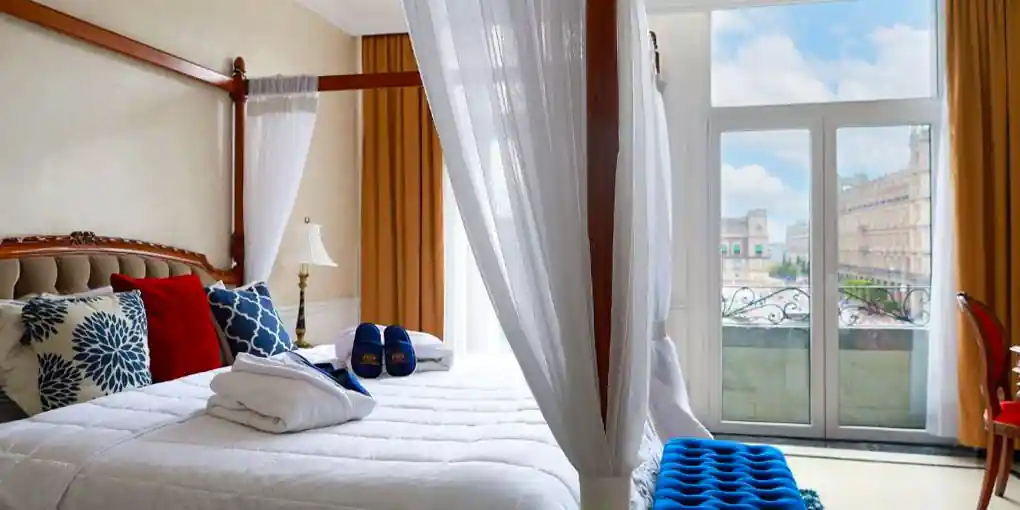
Find Your Mexico City Hotel
The best Mexico City hotels book up fast, and a good location saves time every day. This search pulls together top-rated 5-star stays with strong reviews in the key neighborhoods. It's easy to compare and to book with confidence.
Find The Right Mexico City Hotel
In Mexico City the neighborhood often matters more than the hotel.
Compare highly-rated hotels in Roma Norte, Condesa, Polanco, Coyoacán, and Centro Histórico.