

Mexico City Museums: From Aztec Treasures To Modern Art
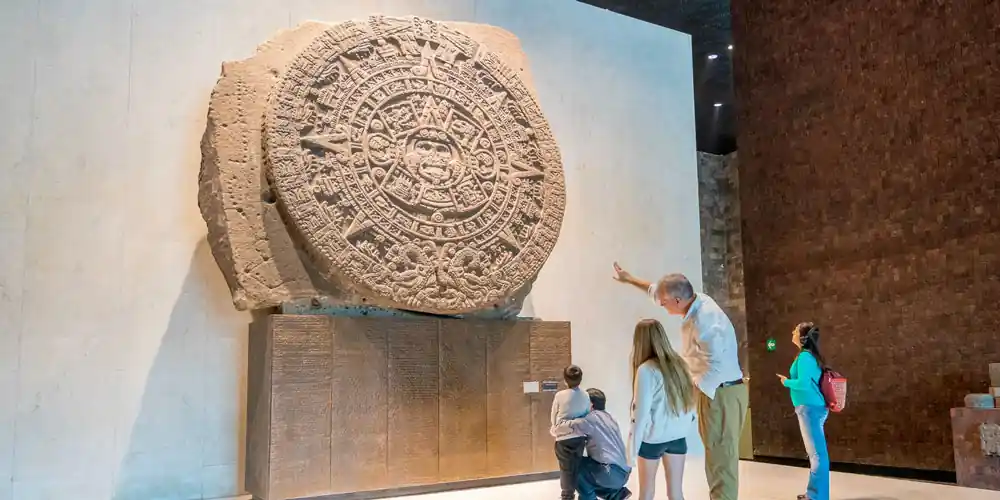 The Aztec Sun Stone at the National Museum of Anthropology.
Mexico City's museums cover ancient civilizations , colonial Mexico, muralism, modern art, design, and popular culture. Collections occupy former palaces, purpose-built galleries, and historic homes across Chapultepec Park, the Historic Center, Coyoacán, and Polanco. Together they tell the story of Mexico through archaeology, painting, architecture, and the lives of its artists.
The National Museum of Anthropology and Frida Kahlo's Casa Azul attract the largest crowds, but they are only part of Mexico City's museum landscape. The museums in this guide cover contemporary art, Mexican painting, archaeology, and decorative arts.
National Museum Of Anthropology
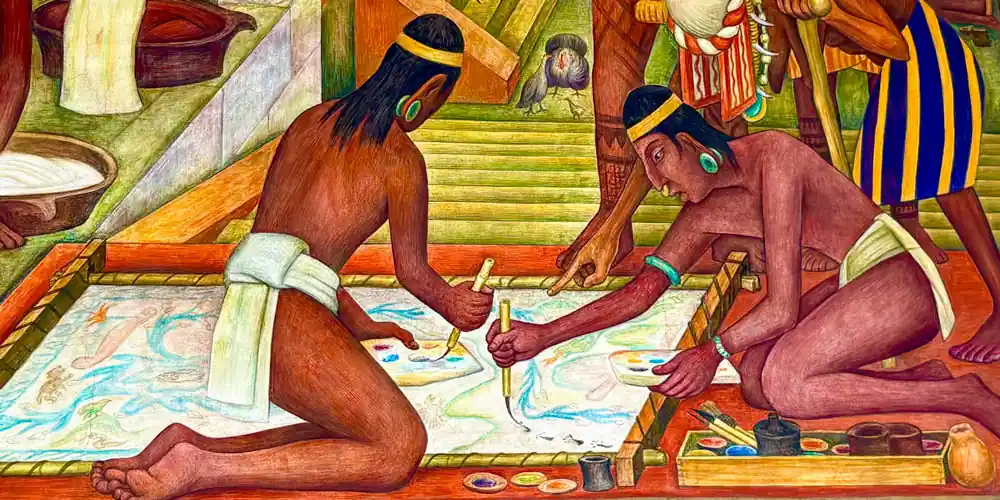 A mural inside the National Museum of Anthropology
The National Museum of Anthropology is Mexico City's essential museum for understanding the country's civilizations before the Spanish conquest. Its galleries trace thousands of years of history through monumental stone sculptures, finely carved jade, ceramics, textiles, and everyday objects recovered across Mexico.
The collection begins with the Olmec, Maya, and Teotihuacan cultures before expanding into the Mexica (Aztec) world. Highlights include the Aztec Sun Stone, the colossal Coatlicue statue, and the reconstructed tomb of the Maya ruler Pakal. The central courtyard, shaded by the museum's vast concrete umbrella, is as memorable as the galleries themselves.
Spend a half day with a private guide exploring. the National Museum of Anthropology with Chapultepec Castle, tracing Mexico's history from its pre-Hispanic civilizations through the colonial era and into the modern republic. The collections become part of a continuous historical narrative rather than a series of individual exhibits.
Private National Museum Of Anthropology & Chapultepec Castle Tour →

Frida Kahlo Museum (Casa Azul)
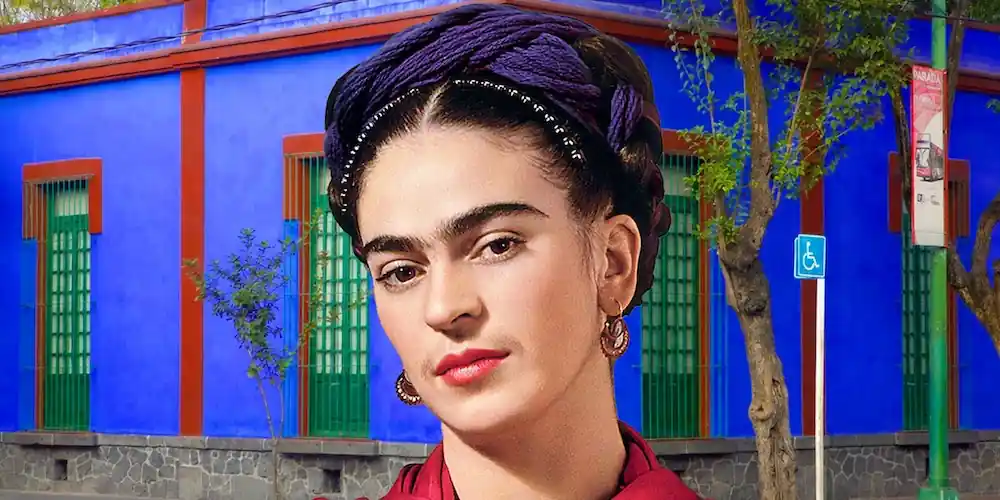 Graphic of Frida Kahlo outside Casa Azul
The Frida Kahlo Museum preserves the house where she was born, lived much of her life, and died. The bright blue home in Coyoacán contains her paintings, clothing, studio, personal belongings, and the rooms where she and Diego Rivera lived and worked. Family photographs, folk art, and pre-Hispanic sculptures collected by Rivera complete the collection.
Begin in Casa Azul before continuing through Coyoacán with a guide, the neighborhood where Kahlo spent much of her life. Along the route, your guide explains her paintings, her relationship with Diego Rivera, and the artistic and political circles that shaped twentieth-century Mexico.
Frida Kahlo Museum & Coyoacán Guided Tour →
Chapultepec Castle & National Museum Of History
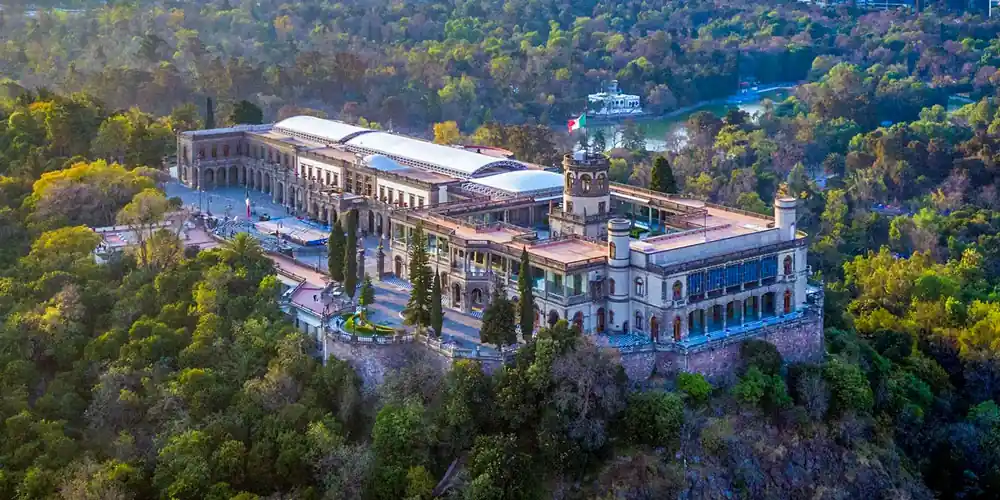 Chapultepec Castle overlooks Chapultepec Park - Wikimedia, Sisgeo
Chapultepec Castle stands on a hill overlooking Chapultepec Park, combining imperial apartments, presidential rooms, formal gardens, and the National Museum of History under one roof. The collections trace Mexico's history from the Spanish conquest through independence, the Reform period, and the Revolution, with period furnishings, military artifacts, paintings, and official state rooms.
Explore Chapultepec Castle and the surrounding forest with a private guide, tracing the site from the Aztec rulers to emperors, presidents, and the National Museum of History. Stories of the people who lived here give the castle's rooms, gardens, and murals greater context.
Private Chapultepec Castle & Forest Tour →
Museo Soumaya

Museo Soumaya is known as much for its striking aluminum-clad building as for the collection inside. Admission is free, and the galleries contain European paintings, sculptures, decorative arts, coins, furniture, and religious works assembled by businessman Carlos Slim. The museum also houses the largest collection of sculptures by Auguste Rodin outside France.
Rodin's sculptures share the galleries with European paintings, decorative arts, and works by Mexican artists from the Carlos Slim Collection. A guide connects these diverse collections through the history of art rather than treating them as separate exhibitions.
Palacio de Bellas Artes & Diego Rivera Murals
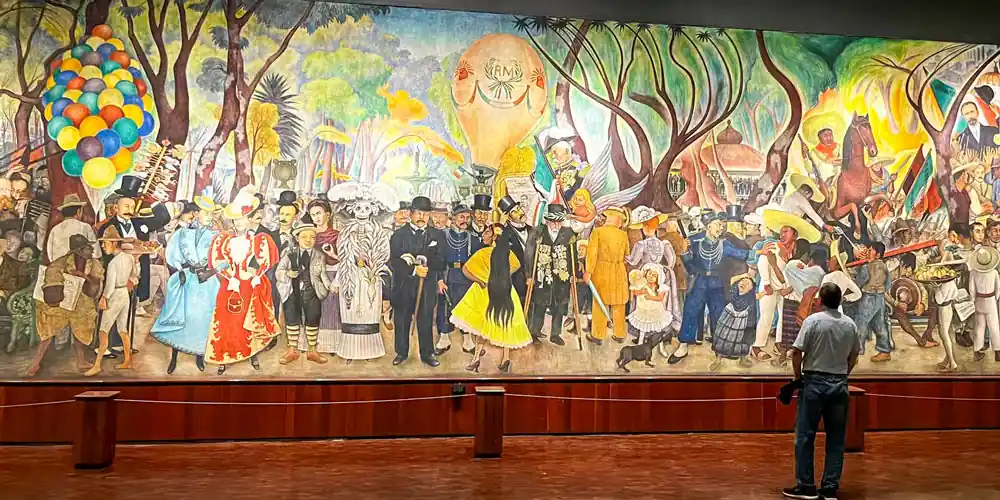 A Diego Rivera mural at Palacio de Bellas Artes
Palacio de Bellas Artes houses murals by Diego Rivera, José Clemente Orozco, David Alfaro Siqueiros, Rufino Tamayo, and other twentieth-century artists. Beyond the exhibition galleries and performance halls, these monumental paintings explore revolution, industry, politics, and Mexican identity within the country's most recognizable cultural building.
Rivera's murals extend beyond Bellas Artes into the Historic Center. This guided walk connects them through the artists, political movements, and public buildings that shaped Mexican muralism.
Diego Rivera Murals Walking Tour →
Museo Jumex
Museo Jumex presents rotating exhibitions of contemporary art drawn from the Jumex Collection and international lenders. Painting, sculpture, photography, installation art, and video fill the galleries, with exhibitions changing throughout the year. The museum stands opposite Museo Soumaya in Polanco, creating a cultural center for modern and contemporary art.
Templo Mayor Museum
Artifacts recovered from the ceremonial center of Tenochtitlan fill the galleries of the Templo Mayor Museum. Stone sculptures, ceremonial offerings, pottery, jewelry, and everyday objects uncovered during archaeological excavations explain the religious and political life of the Mexica civilization. The museum stands beside the Templo Mayor archaeological site in the Historic Center.
Museo Nacional de Arte (MUNAL)
Mexican painting from the colonial period through the early twentieth century fills the galleries of the Museo Nacional de Arte. Works by José María Velasco, Saturnino Herrán, Diego Rivera, and other artists are displayed inside the restored Palace of Communications, a landmark of Porfirian architecture.
Museo de Arte Popular
Traditional craftsmanship from across Mexico is the focus of the Museo de Arte Popular. Textiles, ceramics, glass, lacquerware, masks, alebrijes, and decorative objects illustrate regional techniques that continue to influence Mexican art and design.
Museo Franz Mayer
Furniture, silver, ceramics, clocks, textiles, sculpture, and rare books make up the core of the Franz Mayer Collection. The galleries occupy a restored seventeenth-century monastery, where temporary exhibitions complement the museum's permanent decorative arts collection.
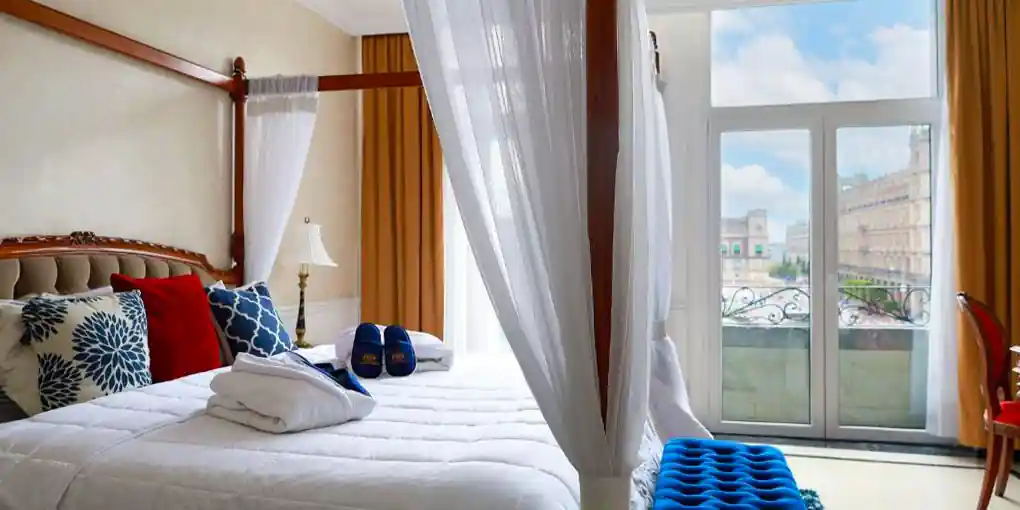
Find Your Mexico City Hotel
The best Mexico City hotels book up fast, and a good location saves time every day. This search pulls together top-rated 5-star stays with strong reviews in the key neighborhoods. It's easy to compare and to book with confidence.
Frequently Asked Questions
WHICH MUSEUM SHOULD I VISIT FIRST?
The National Museum of Anthropology is the city's most important museum, with collections spanning the Olmec, Maya, Mexica (Aztec), and other civilizations. Many visitors also include the Frida Kahlo Museum, Chapultepec Castle, and Palacio de Bellas Artes in their plans.
WHICH MUSEUMS IN MEXICO CITY REQUIRE ADVANCE TICKETS?
The Frida Kahlo Museum often sells out well in advance because admission is limited. Guided tours that include museum entry are another way to visit. Most other major museums have tickets available at the entrance.
ARE MUSEUMS IN MEXICO CITY FREE?
Some museums charge admission, while others are free. Museo Soumaya is always free, and many government-operated museums offer free admission to Mexican citizens and residents on Sundays. Visitors from outside Mexico should check current admission policies before visiting.
HOW MANY MUSEUMS SHOULD I VISIT IN MEXICO CITY?
Two or three museums fit comfortably into most itineraries. The National Museum of Anthropology, Frida Kahlo Museum, and Chapultepec Castle each deserve several hours, while smaller museums such as Museo de Arte Popular or Museo Franz Mayer are easier to add to a day of sightseeing.
Find The Right Mexico City Hotel
In Mexico City the neighborhood often matters more than the hotel.
Compare highly-rated hotels in Roma Norte, Condesa, Polanco, Coyoacán, and Centro Histórico.