Frida Kahlo In Mexico City: Her Life, Art & Legacy
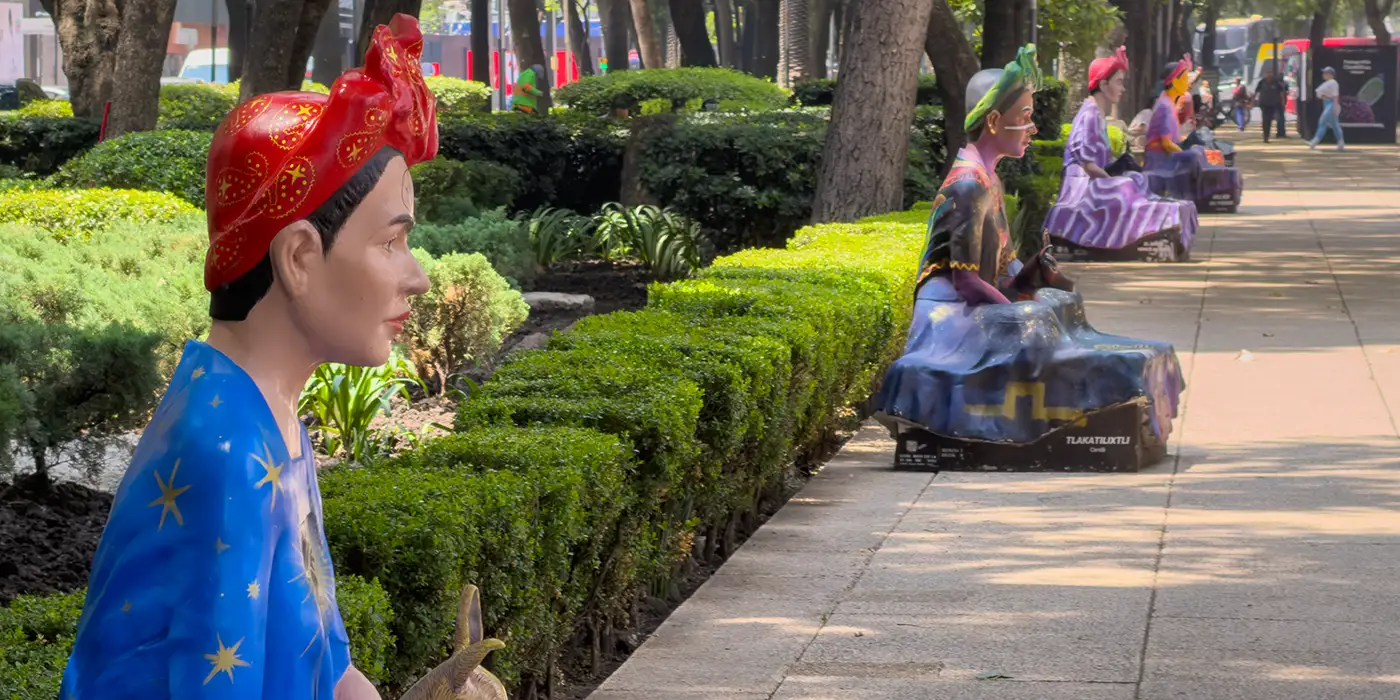 Frida Kahlo figures along Paseo de la Reforma – Mark Craft
Frida Kahlo is everywhere in Mexico City, but her story belongs to Coyoacán, the former town south of the city center that became part of Mexico City. The blue house where she was born and died is now the Frida Kahlo Museum, surrounded by the streets, plazas, churches, and markets that Kahlo knew for most of her life.
Her work is rooted in the same world: family rooms, garden plants, Mexican dress, illness, politics, marriage, and the rituals of daily life. In Mexico City, those elements are not abstract. They are tied to a house, a neighborhood, and a circle of artists whose work can be seen across the city.
Frida Kahlo's Coyoacán
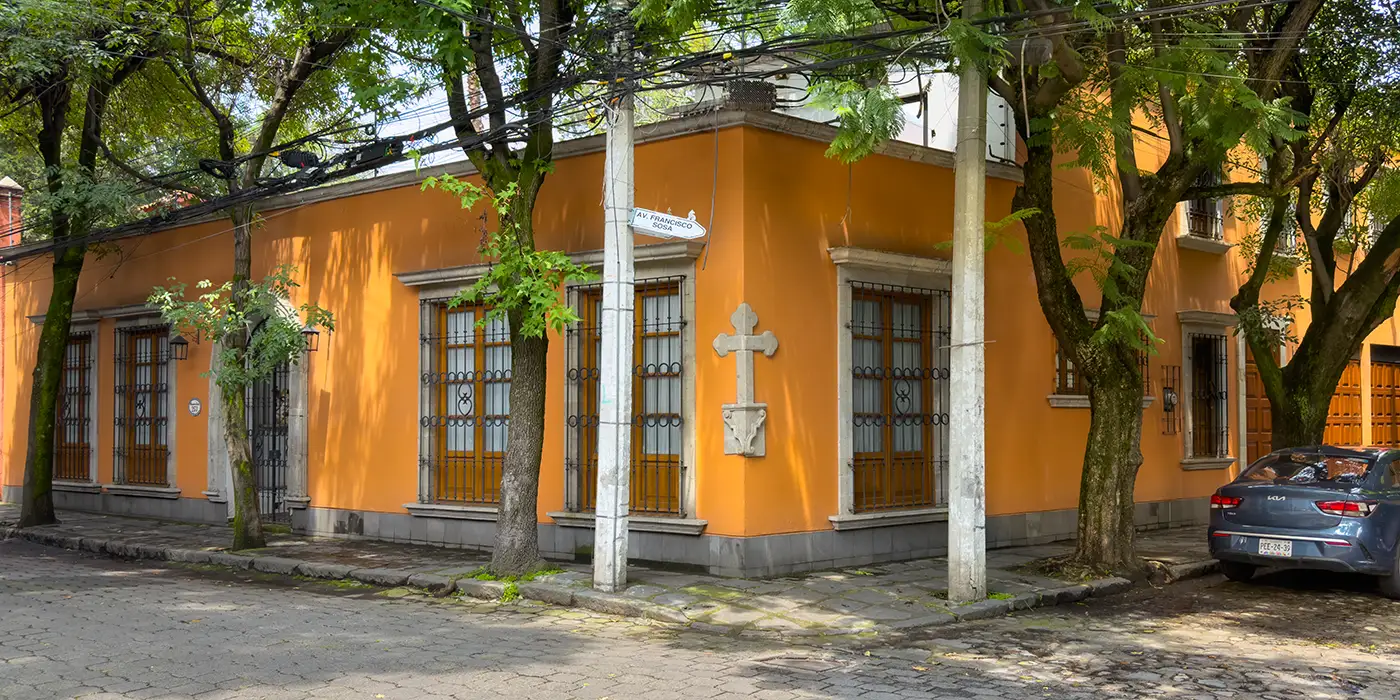 A residential street in Frida Kahlo's Coyoacán – Mark Craft
Coyoacán was a leafy town on the southern edge of Mexico City when Frida Kahlo was born here in 1907. Today, colorful low buildings and mature trees surround Jardín Hidalgo and Jardín Centenario, the adjoining plazas at the heart of the neighborhood. Families gather around the fountains, musicians play beneath the trees, and food vendors and mark et stalls draw weekend crowds. A few streets away, cobblestones, brightly painted houses, and garden walls give way to quieter residential streets.
One small-group walking tour we like connects Coyoacán with Frida Kahlo's life here. Along the way, the guide ties the neighborhood's streets and buildings to Kahlo's family, her marriage to Diego Rivera, and the artists and political figures who became part of their circle. The tour spends time in Coyoacán itself before continuing to Casa Azul, beginning Kahlo's story in the neighborhood where she spent much of her life.
Frida Kahlo's Coyoacán Small-Group Tour →
Inside Casa Azul
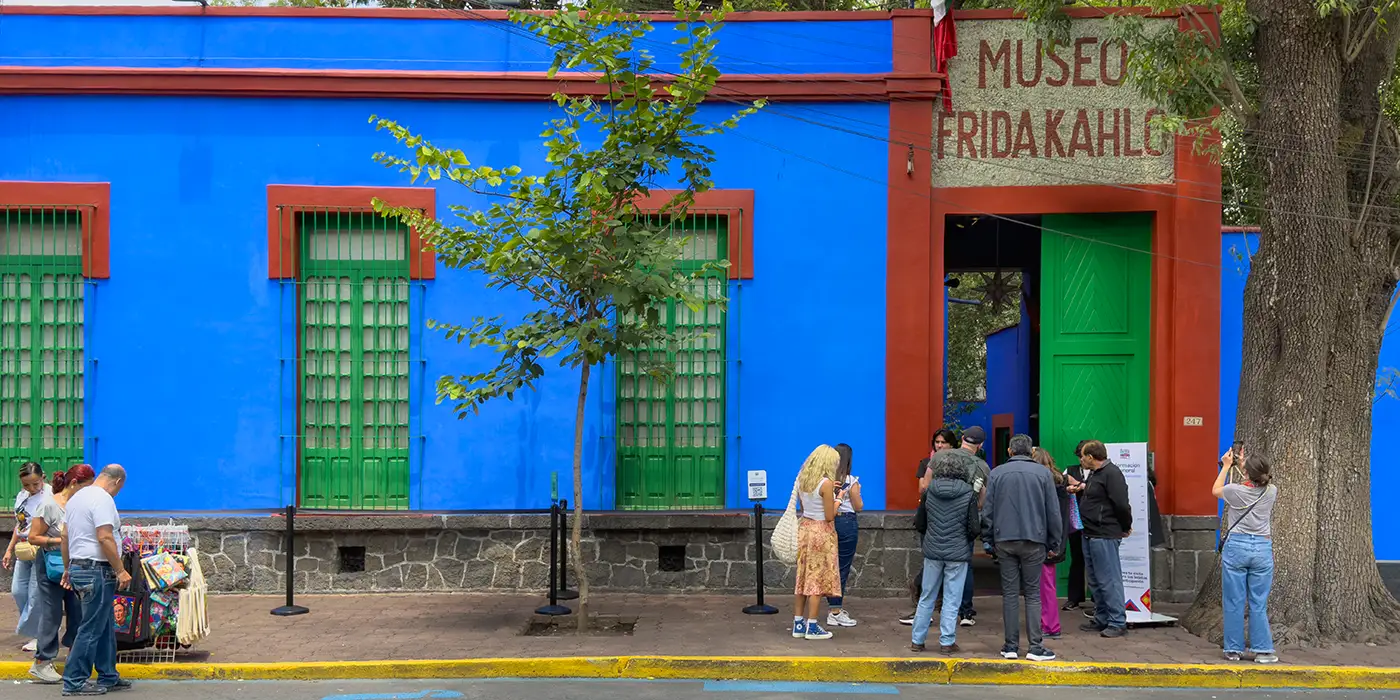 Casa Azul, the Frida Kahlo Museum – Mark Craft
Inside Casa Azul, the rooms are filled with the things Frida Kahlo lived and worked with. Her clothes and jewelry, photographs and books are here, along with her paints and brushes, decorated kitchen, studio, wheelchair, and the beds where illness confined her for long periods.
Then there is the garden. Stone paths run among cacti, agaves, tropical plants, fountains, pre-Hispanic objects, and small pyramidal structures, all enclosed by those intense blue walls. It's one of the loveliest parts of Casa Azul, and an intimate glimpse of the physical world Kahlo made around herself.
For a closer look at Casa Azul, a guided museum visit includes admission and concentrates on Kahlo's life in the house, her relationship with Rivera, and the personal objects that fill its rooms.
Frida Kahlo Museum Guided Tour →
Coyoacán Market & Casa Azul
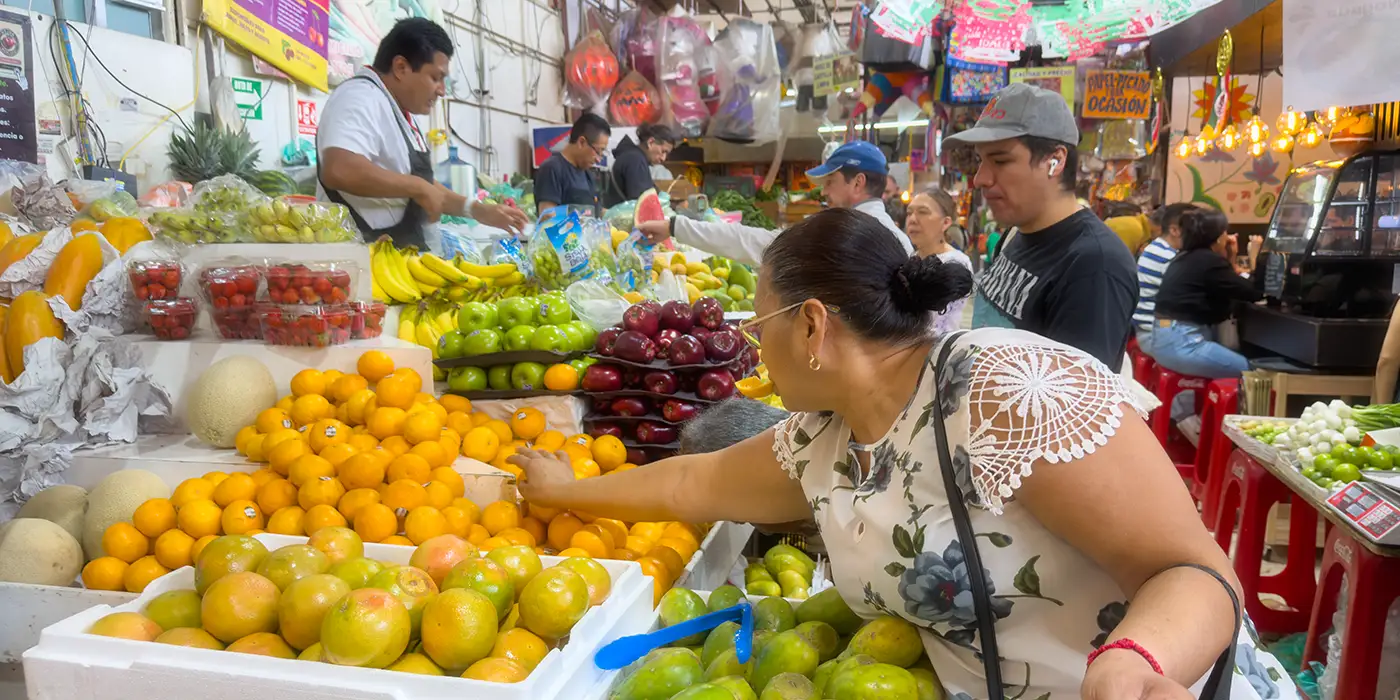 Inside Coyoacán Market – Mark Craft
Mercado de Coyoacán is a busy working market in the heart of the neighborhood. Fruit and vegetables fill the produce stalls; elsewhere are flowers, spices, piñatas, household goods, and counters serving tostadas and other prepared foods. At lunchtime, shoppers crowd around the food stalls for tacos, quesadillas, and tostadas.
A 3½-hour walking tour combines Coyoacán's streets and plazas with lunch in the market before continuing to Casa Azul. Along the way, you see Coyoacán at street level — its plazas, market shoppers, food stalls, and neighborhood streets — before entering Kahlo's blue house.
Coyoacán Market & Frida Kahlo Walking Tour →
Frida Kahlo's Life & Legacy
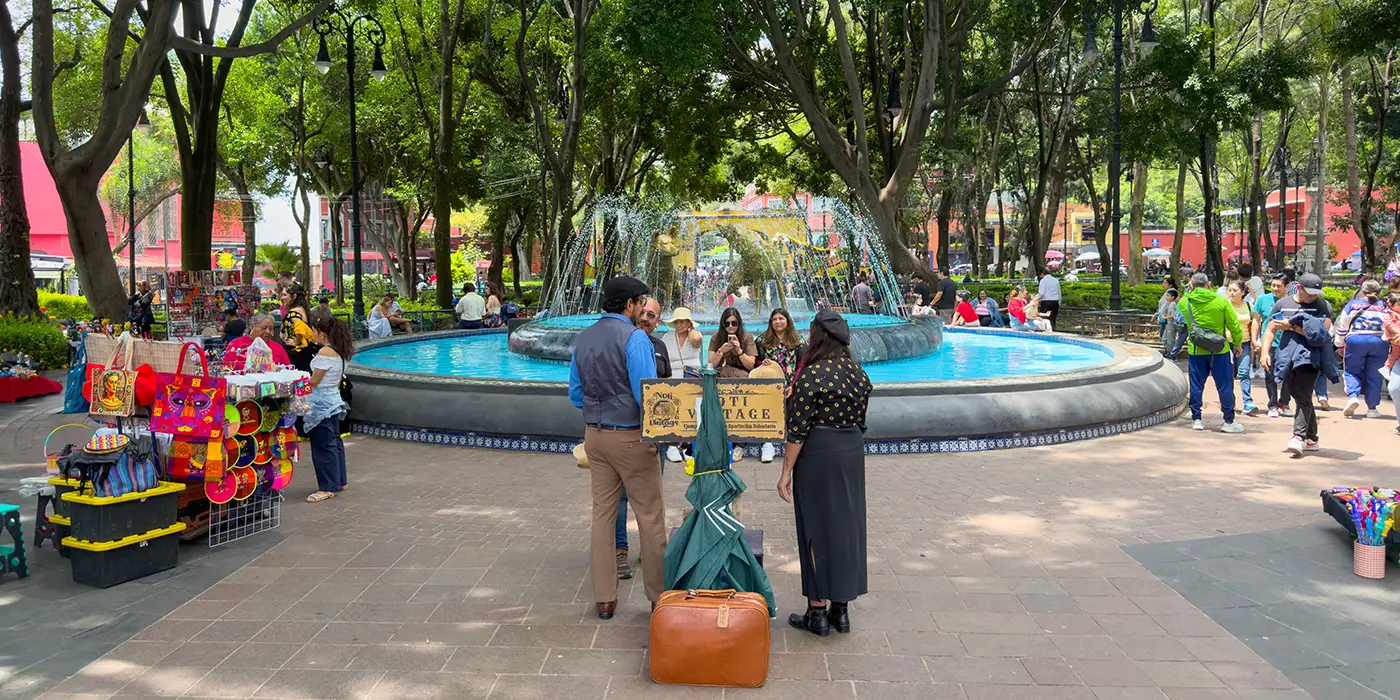 Sunday in Plaza Coyoacán – Mark Craft
Frida Kahlo turned her own life into the subject of her art. Polio left her with a weakened leg as a child; at eighteen, a streetcar collided with the bus she was riding, causing catastrophic injuries that led to operations, corsets, long periods in bed, and pain for the rest of her life. She began painting seriously during her recovery, using a mirror mounted above her bed.
She married Diego Rivera in 1929. Their marriage brought together two formidable artists and two difficult personalities, along with affairs, divorce, remarriage, politics, travel, and a house frequently filled with artists and political figures. Leon Trotsky lived at Casa Azul for a time after Kahlo and Rivera helped secure asylum for him in Mexico; Kahlo herself became increasingly politically active during the final years of her life.
Her paintings are intensely personal. Kahlo repeatedly painted her own face, but around it she assembled a vocabulary drawn from the rest of her life: monkeys and dogs, tropical plants, indigenous Mexican dress, Catholic imagery, blood, broken bodies, pregnancy, death, and the physical apparatus used to hold her damaged body together. The elaborate Tehuana dresses that became part of her public identity were beautiful, unmistakably Mexican, and practical — long skirts concealed her injured leg, while loose blouses accommodated the medical corsets she wore beneath them.
Kahlo died at Casa Azul in 1954, aged 47. Four years later the house opened as the Museo Frida Kahlo. Her ashes are there, in a pre-Hispanic urn in the bedroom — one final connection between the artist and the blue house in Coyoacán.
Frequently Asked Questions
WHAT IS CASA AZUL?
Casa Azul is the house where Frida Kahlo was born, lived for much of her life, and died. Today it is the Frida Kahlo Museum, displaying her paintings, personal belongings, studio, gardens, and family home.
DO YOU NEED TICKETS FOR THE FRIDA KAHLO MUSEUM?
Yes. Admission is by timed entry, and tickets frequently sell out in advance. Guided tours with reserved admission are one of the easiest ways to visit.
HOW LONG DOES IT TAKE TO VISIT CASA AZUL?
Most visitors spend between one and two hours at the museum. If you also plan to walk around Coyoacán, allow at least half a day.
IS COYOACÁN WORTH VISITING WITH THE FRIDA KAHLO MUSEUM?
Yes. Coyoacán's plazas, streets, market, and cafés help place Frida Kahlo's life in its original setting, making it a natural companion to a visit to Casa Azul.
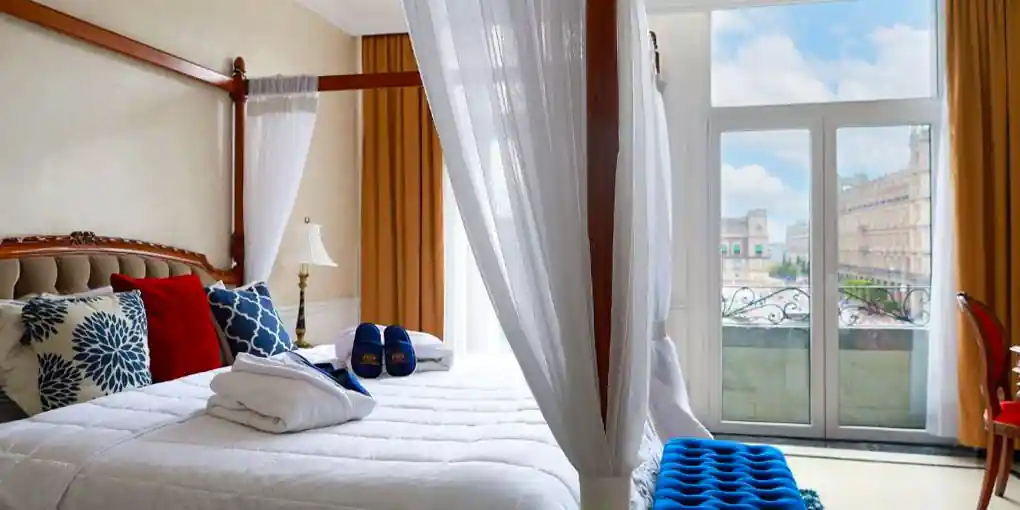
Find Your Mexico City Hotel
The best Mexico City hotels book up fast, and a good location saves time every day. This search pulls together top-rated 5-star stays with strong reviews in the key neighborhoods. It's easy to compare and to book with confidence.
Find The Right Mexico City Hotel
In Mexico City the neighborhood often matters more than the hotel.
Compare highly-rated hotels in Roma Norte, Condesa, Polanco, Coyoacán, and Centro Histórico.