



Getting Around Mexico City:
Choosing The Right Transportation
Getting Around Mexico City: Choosing The Right Transportation
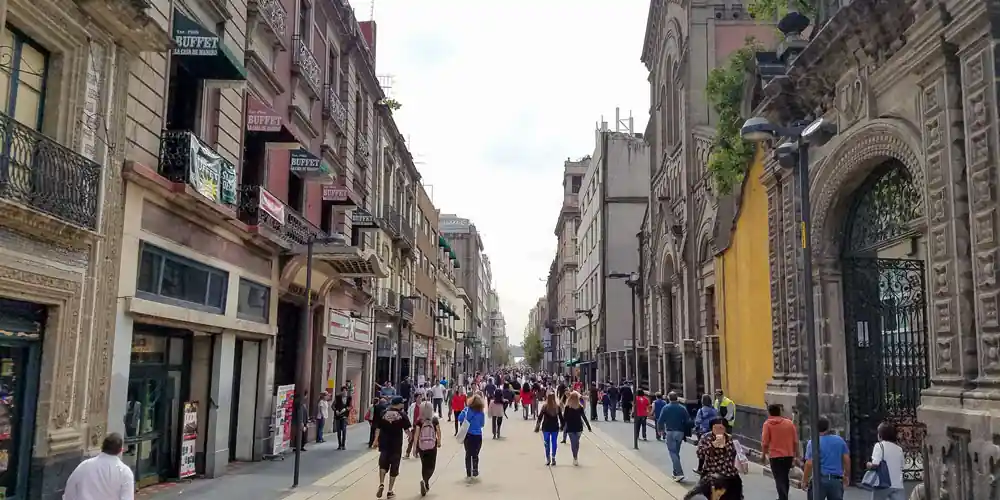 People walk along Calle Madero in Centro Histórico – Market Urbanism, Nolan Gray
Roma, Condesa, Centro Histórico, Polanco and Coyoacán are close, but not within easy walking distance of one another. Once you arrive in a neighborhood, much of the sightseeing is done on foot. Reaching the next part of the city usually means taking an Uber, the Metro or the Metrobus.
Uber is the practical choice for many trips between neighborhoods. The Metro and Metrobus are useful on selected routes, especially when traffic is heavy. Walking, public transportation and car travel all have a place in the same day
Guide To Mexico City Neighborhoods →
Walking Mexico City
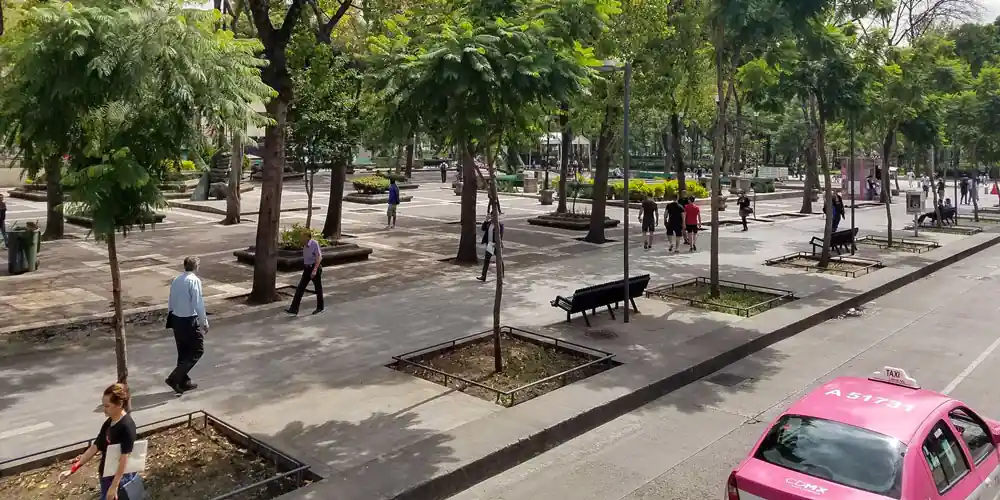 People walk through Alameda Central in Mexico City – Market Urbanism, Katarina Hall
Walking reveals a side of Mexico City that you don't see from a car or the Metro.Tree-lined streets in Roma and Condesa lead past cafés, bakeries, bookstores, galleries and neighborhood parks. In Polanco, wide sidewalks connect museums, restaurants and shopping streets, while Centro Histórico unfolds plaza by plaza around churches, markets and historic buildings.
Between the major sights are quieter streets with names such as Tabasco, Colima, Amsterdam and Tamaulipas. Small shops, corner cafés and jacaranda trees in spring become part of the walk as much as the destination itself. And, if you find you've walked enough, order and Uber to get you to your next destination.
Uber And Taxis
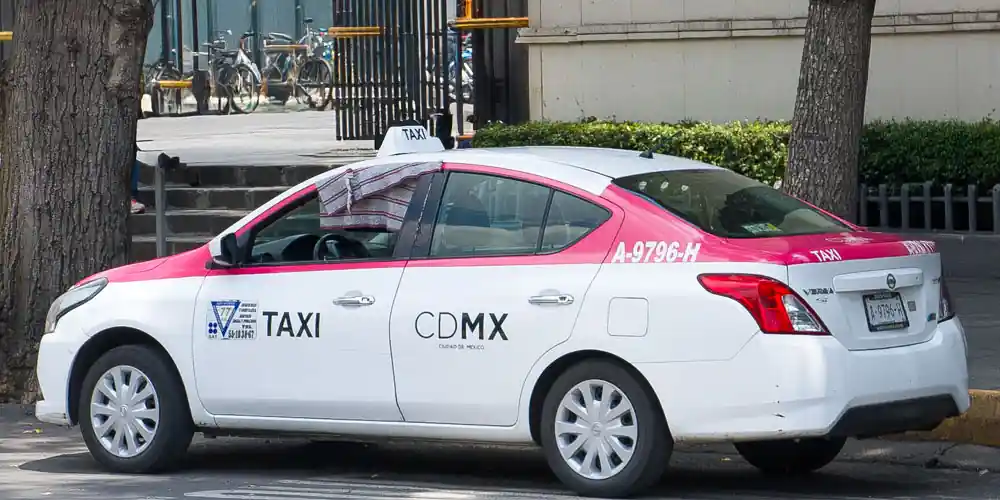 An official Mexico City taxi – Cuartoscuro
Uber is the simplest way to travel between Mexico City neighborhoods. The app shows the fare before you book, identifies the driver and vehicle, and removes the need to explain an address or negotiate a price. It is particularly useful for trips between Roma, Condesa, Polanco, Centro Histórico and Coyoacán.
Travel times depend heavily on traffic. A journey that takes 20 minutes in the middle of the day may take twice as long during the morning or evening rush. Check the estimated arrival time before booking, especially when you have a museum reservation, dinner booking or timed tour.
Official Mexico City taxis are white and pink. Taxis from hotel entrances and authorized taxi stands are useful when a car is already waiting, although fares are less transparent than they are in an app. The Mi Taxi feature in the App CDMX verifies the vehicle and driver and lets you share the journey in real time.
Riding The Metro
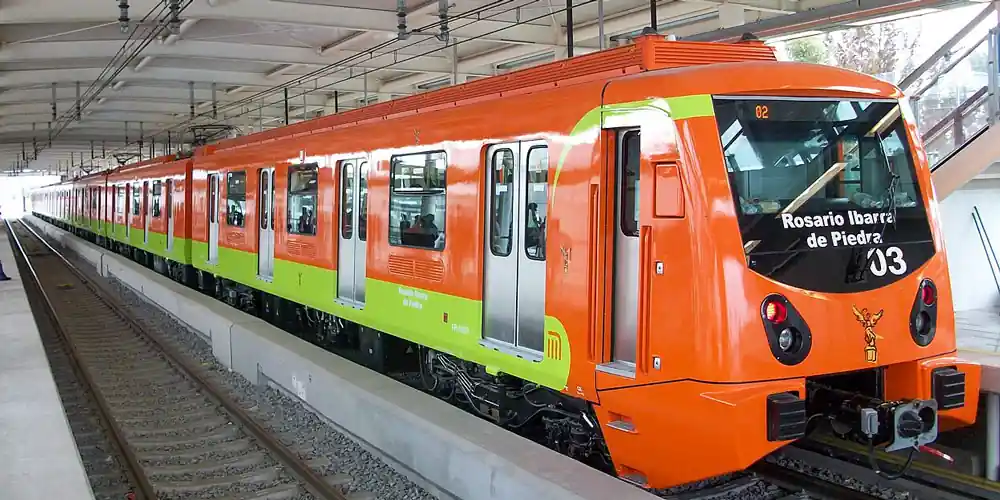 A Mexico City Metro train at Rosario Ibarra de Piedra station – Wikimedia, GAED
Mexico City's Metro is fast, inexpensive and reaches most of the city's major districts. Twelve lines connect Centro Histórico, Chapultepec, Coyoacán, Polanco, Roma, Condesa and many other neighborhoods. Trains avoid the traffic that slows travel above ground.
Stations are identified by names and pictograms as well as line colors, making the system easier to navigate if you do not speak Spanish. Direction signs show the final station on each line rather than compass directions, so knowing your destination station before you enter the platform is helpful.
The Metro is busiest on weekday mornings and evenings, when trains and platforms become crowded. Outside the rush hours it is an efficient way to cross the city, particularly for longer journeys.
Metrobus
Metrobus is a fast alternative when your destination lies along one of its main routes. Dedicated bus lanes avoid much of the traffic on major avenues such as Paseo de la Reforma and Avenida de los Insurgentes, linking neighborhoods that would otherwise require a longer journey by road.
Stations are located in the centre of the roadway and are reached by pedestrian crossings or bridges. Buses stop only at marked stations, and route maps are displayed on the platforms. Like the Metro, Metrobus can become crowded during weekday rush hours.
For many visitors, Metrobus fills the gap between the Metro and Uber. It is particularly useful for straightforward trips along Reforma, to the Historic Centre, and between neighborhoods served by a single line.

Book An Airport Transfer Before You Arrive
Landing in a new city is easier when your ride is already arranged. A driver meets you at the terminal, helps with luggage, and takes you directly to your hotel without taxi lines or figuring out public transportation.
Getting To And From The Airport
Mexico City International Airport is about 10 kilometres (6 miles) east of Centro Histórico. Private transfers, airport taxis, Metro, Metrobus and public buses all connect the airport with the city.
Accessibility
Accessibility varies across Mexico City. Newer neighborhoods such as Polanco have wide sidewalks and modern crossings, while older areas, including parts of Centro Histórico and Coyoacán, may have uneven pavements, high curbs and cobblestones.
Many Metro stations have elevators or ramps, but not all are fully accessible. If step-free access is important, Uber or an accessible taxi is often the more practical choice for getting between neighborhoods.

Find Your Mexico City Hotel
The best Mexico City hotels book up fast, and a good location saves time every day. This search pulls together top-rated 5-star stays with strong reviews in the key neighborhoods. It's easy to compare and to book with confidence.
FAQs
IS MEXICO CITY EASY TO GET AROUND?
Yes. Walking works well within individual neighborhoods, while Uber, the Metro and Metrobus cover longer distances between them.
IS UBER AVAILABLE IN MEXICO CITY?
Yes. Uber is widely used and is a convenient choice for trips between neighborhoods, especially when you are carrying luggage or traveling after dark.
IS THE MEXICO CITY METRO SAFE?
The Metro is widely used, but trains and platforms become crowded during rush hours. Keep phones, wallets and bags secure, particularly in busy stations.
CAN I PAY CASH ON THE METRO OR METROBUS?
Both systems use the rechargeable Integrated Mobility Card. Cards can be purchased and topped up at Metro and Metrobus stations.
DO I NEED A CAR IN MEXICO CITY?
No. Traffic is heavy, parking is limited and public transportation covers much of the city. Walking, Uber, the Metro and Metrobus are enough for most trips.
HOW LONG DOES IT TAKE TO TRAVEL BETWEEN NEIGHBORHOODS?
Most Uber rides take around 20 minutes, but travel times vary with traffic. Roma and Condesa are close together, while trips to Coyoacán, Polanco or Centro Histórico take 30 minutes or more.
Find The Right Mexico City Hotel
In Mexico City the neighborhood often matters more than the hotel.
Compare highly-rated hotels in Roma Norte, Condesa, Polanco, Coyoacán, and Centro Histórico.